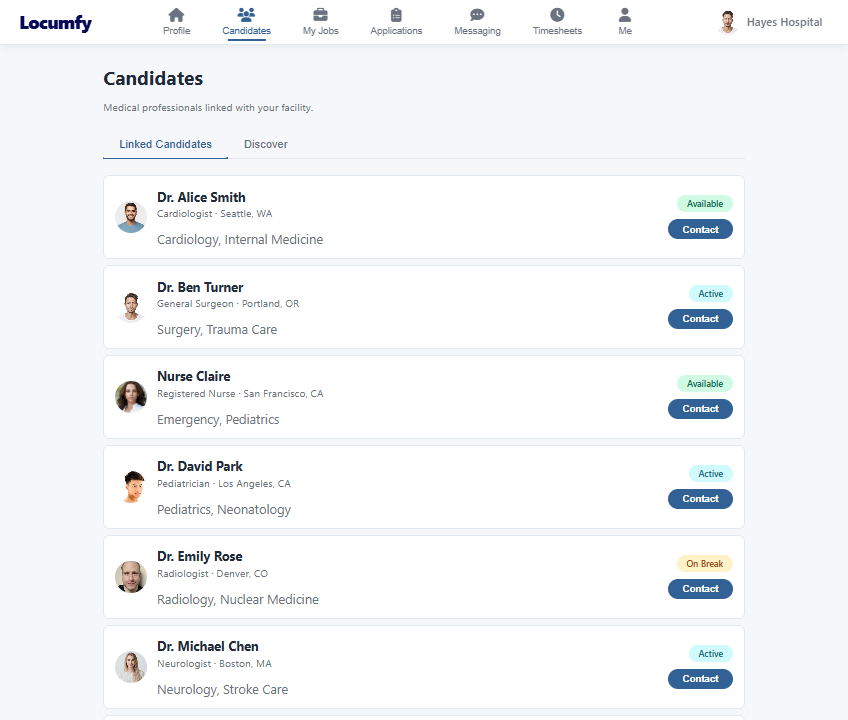
Hospitals, clinics, health networks and staffing teams work in a browser-based portal built around the job they actually do: finding the right professional, moving them through an application, and keeping the record straight once the work begins.
Every profile in the portal is built from structured resume data and cross-checked against official records — so a licence, a specialty or a registration number means something before you make contact.
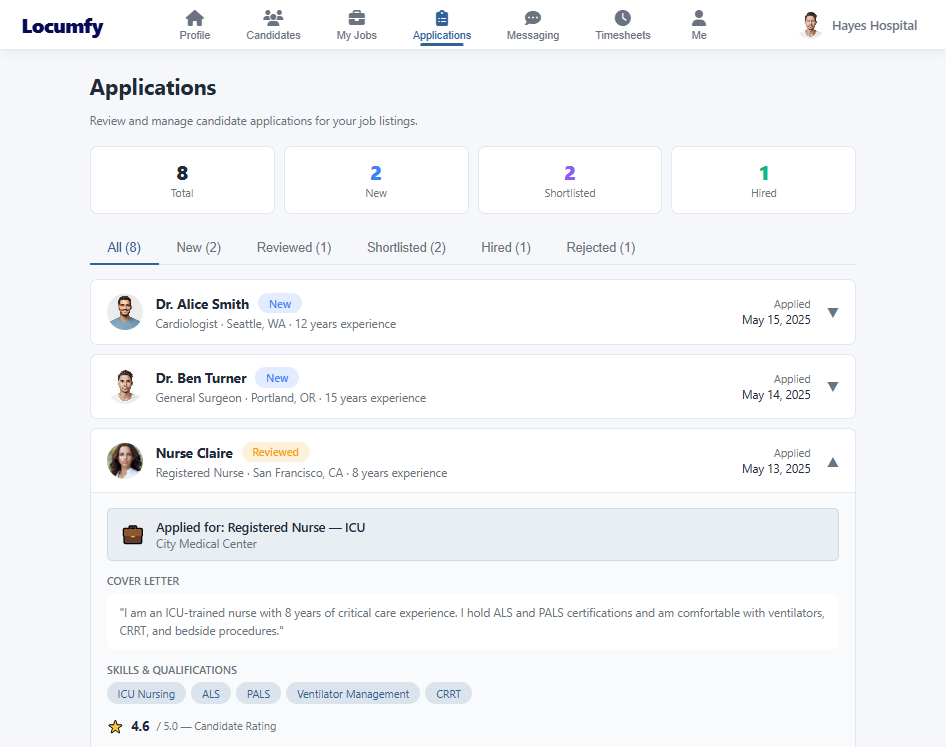
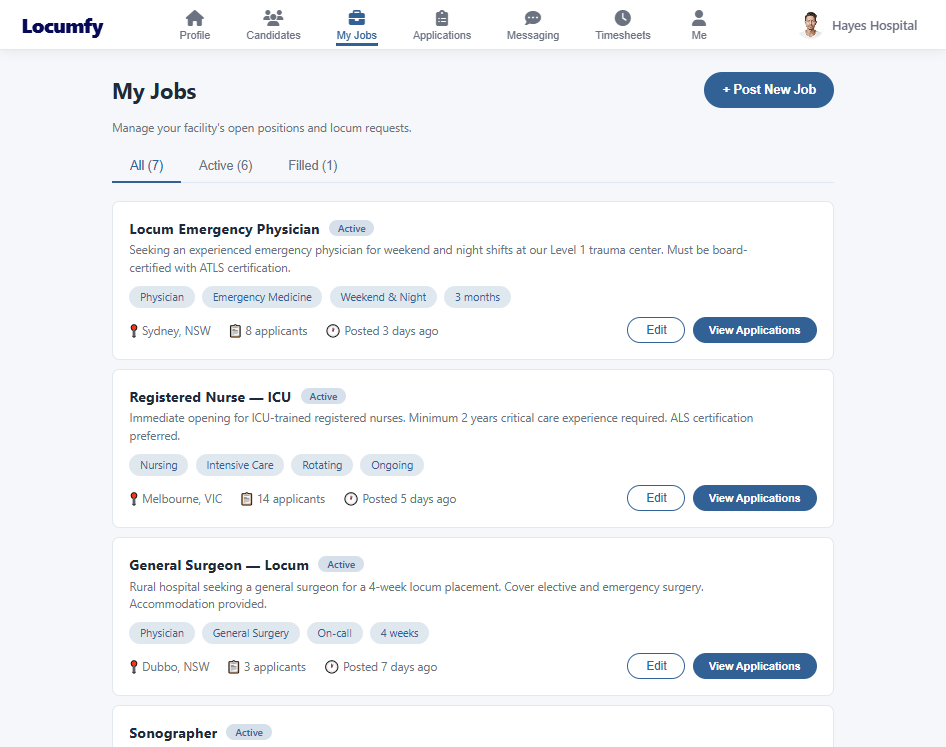
Post a role once and manage everything that follows in the same place. Applications arrive against the job, carry the candidate's verified profile, and move through a clear set of states that both sides can see.
Title, specialty, setting, location, duration and requirements, published to the network.
Applicants arrive with their profile, cover letter, skills and qualifications attached.
Move promising candidates forward and keep the pipeline visible to your whole team.
Accepting locks the professional to the role and clears their other open applications automatically.
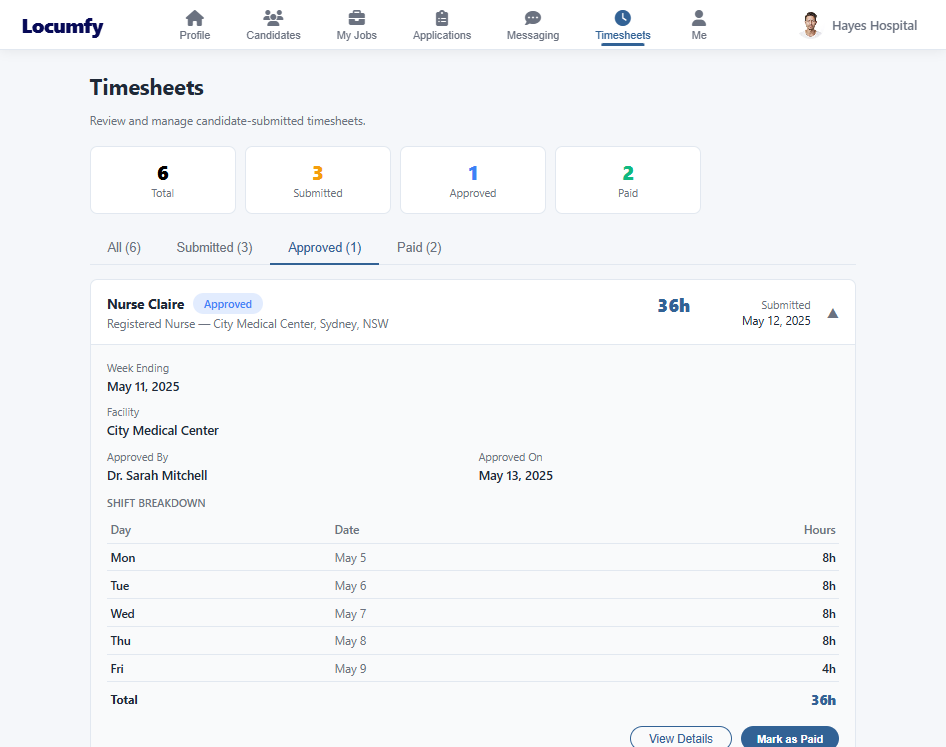
When a professional works a role you posted, their timesheet comes back to you — not to a spreadsheet or an email thread. Each one arrives tied to the assignment, the week, and the person, with the full shift breakdown attached.
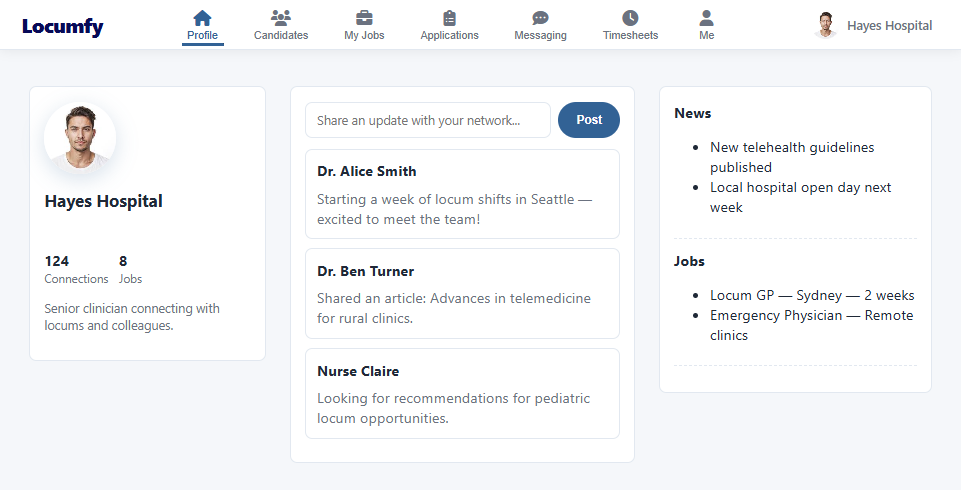
A facility keeps its own profile and feed, posts updates the professional community sees, and holds direct conversations with candidates using the same messaging system clinicians use with each other.
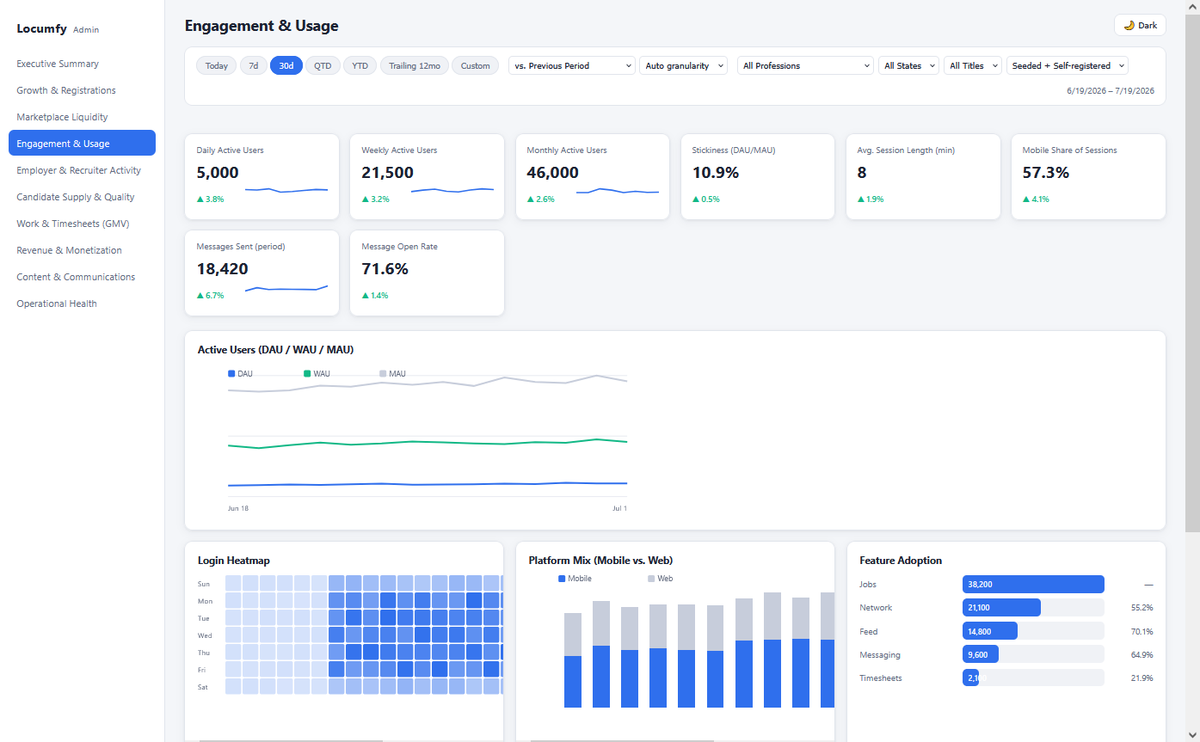
Every action on the platform is captured as structured data, which means the health of the marketplace is measurable without anyone assembling a report by hand. The operations dashboard covers growth and registrations, marketplace liquidity, engagement and usage, recruiter activity, candidate supply and quality, hours worked, and operational health.
Filters run across professions, states, titles and time ranges, so a question about one specialty in one region is a couple of clicks rather than a data request.